Downspout Repair in Chicago, IL

Downspout repair Chicago IL: drainage that moves water away

Downspout repair and installation for Chicago homes: crushed elbows, loose brackets, blocked leaders, and extensions that carry roof water clear of the building.

Downspout Repair in Chicago, IL
About this service

The last leg of the journey water takes

A downspout is the last leg of the journey roof water takes: from the trough, down the wall, and away from the building. When it works, nobody notices it. When it fails, the whole system above it fails with it: a blocked downspout backs water up along the run, a disconnected downspout pours water beside the foundation, and a crushed elbow chokes the flow at the point where the system turns. Downspout work is often the smallest job on the house and the one that matters most on the wettest days.

Chicago's combined sewer system adds honest context. The Metropolitan Water Reclamation District describes the combined sewers as generally capable of handling at most a 5-year storm, and the July 2-3, 2023 storm flooded roughly 70,000 basements, substantially through sewer surcharge. Gutters and downspouts manage roof water and surface water; they do not prevent sewer backups, and no downspout claim on this site suggests otherwise. What downspouts do is keep roof water from adding to the water already pressing on the foundation, and that is a job worth doing well. In Chatham, the one area with sourced disproportionate flooding reports, discharge direction and grading are central, with sewer-backup separation stated plainly.

Downspout work folds together repair and installation: fixing what is there, adding what is missing, and extending discharge to where water should go. The work reads the whole path, from the outlet at the trough to the point where water leaves the leader, because a repair at one end that ignores the other end only moves the failure. Blocks around the business address in Belmont Cragin, with their bungalows, Cape Cods, and two-flats, show the range in a small area: short front leaders, long rear leaders, and shared leaders on attached rows, each with its own failure points. Where the trough above is the trouble, gutter repair is the companion job.

  • ✓ Downspout repair
  • ✓ Downspout installation
  • ✓ Extensions and discharge direction
What's included

What downspout work covers

Covered below: Downspout repair; Downspout installation; Extensions and discharge direction — and the rest of the checklist.

01
✓

Downspout repair

Repair covers failures below the trough: split elbows, lengths pulled from the wall, loose or missing brackets, seams opening at joints, and leaders settled out of line. Each failure is read in place, since a crushed elbow and a blocked leader cause the same overflow. In South Lawndale, rear porches, dormered attics, and alley garages add short runs to every lot, and the rear is often where the work is.

02
✓

Downspout installation

Installation adds leaders where the system needs them: a long run with a single outlet, a valley concentrating flow, or a new trough with no leader below it. Placement follows the roofline, putting leaders where water arrives, and brackets are fixed into solid wall rather than failing mortar. New leaders are sized to the trough above, so the outlet is not choked by a leader too small for its flow.

03
✓

Extensions and discharge direction
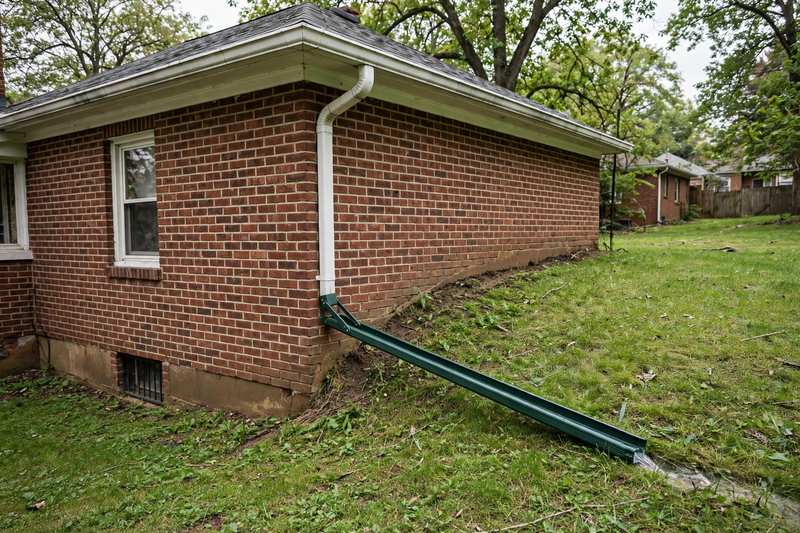
An extension carries water from the base of the leader where it should go: away from the foundation, clear of walks and neighbors, onto ground that takes it. Discharge direction is the point of the whole system, and a leader dropping water beside the foundation wall has moved the problem, not solved it. Extensions are chosen for the lot: its slope, planting, and the paths water takes in rain.

04
✓

Oversized downspouts

Oversized downspouts, often 3 by 4 inches, pair with wider troughs and runs carrying concentrated flow from valleys and long elevations. A wide trough feeding a narrow leader is a bottleneck, showing as overflow at the outlet during heavy rain. In Avondale, where flat-roofed two- and three-flats drain through rear leaders, leader size and condition decide whether the flat roof above drains or ponds.

05
✓

Drainage beyond the downspout

Beyond the discharge point, water is a grading and landscaping question, and honesty about scope matters. Underground drainage and French drains are usually landscaper work, and this page does not claim them as gutter work. Gutter work delivers water to the discharge point, pointed the right way. Where the ground beyond needs reshaping or a buried line, that conversation is had openly, and the right trade is named.

How it works

How downspout work runs

The job starts with a call to (872) 867-8606 during business hours: Mon–Sat 6:00 AM–5:00 PM, Sun 6:00 AM–1:00 PM. The call covers the symptom, where the water shows, and whether the trouble is at the top, the middle, or the base of the leader.

The visit traces water from the outlet to the discharge point: trough outlet, elbows, brackets, leader length, and the ground where water lands. The cause is found by following the path, not by guessing at the symptom.

What will be repaired, what will be added, and where discharge will go are discussed before work begins. If the ground beyond the discharge point needs work outside gutter scope, that is said plainly at this stage.

Damaged sections are replaced, brackets are reset into solid wall, new leaders are fitted where needed, and extensions are set to carry water clear of the building. The trough above is checked too, since gutter cleaning trouble at the outlet mimics leader trouble below.

Water is run through the system to confirm it travels the full path and lands where planned. A leader that flows freely but discharges beside the foundation has not finished its job, and the check covers the landing as well as the flow.

Downspout Repair process in Chicago
STEP 01Call during business hours

The job starts with a call to (872) 867-8606 during business hours: Mon–Sat 6:00 AM–5:00 PM, Sun 6:00 AM–1:00 PM. The call covers the symptom, where the water shows, and whether the trouble is at the top, the middle, or the base of the leader.

Tools & methods

Materials and equipment in downspout work

01
✓

Downspout lengths

Downspout lengths in rectangular or round profiles carry water down the wall, matched to the trough above and the architecture of the house. Lengths are cut to the elevation they serve, with joints kept to the points where the leader turns or meets a fitting.

02
✓

Elbows and offsets

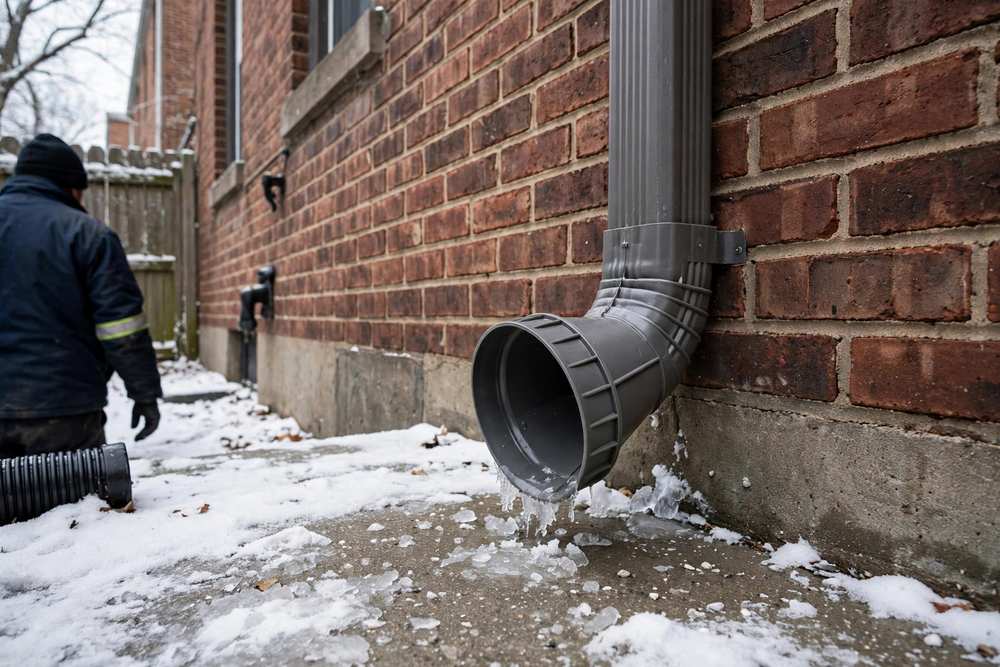
Elbows turn the leader around eaves, cornices, and wall offsets, and they are the most common choke points in the system. A crushed or misaligned elbow is replaced rather than forced back into shape, since a deformed elbow keeps catching debris.

03
✓

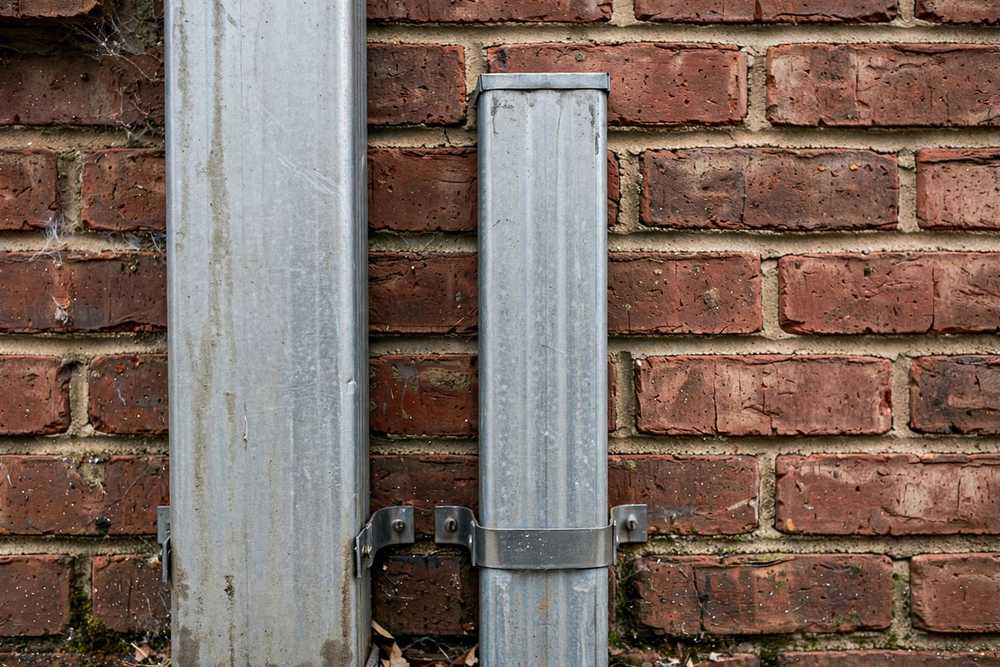
Brackets and wall fixings

Brackets hold the leader to the wall at spacings that keep it straight and still. Fixings go into solid wall material, and loose brackets are reset rather than re-tightened into holes that have already failed.

04
✓

Extensions and splash fittings

Extensions and splash fittings carry water from the base of the leader to the discharge point, spreading the flow so it does not cut a channel in one spot. The fitting is chosen for the lot and the slope, not from a single default.

05
✓

Outlets and drop fittings

Outlets connect the trough to the leader, and their size has to match both. An undersized outlet chokes a wide trough, and a poorly seated outlet leaks at the joint where the system turns downward. Gutter installation thinking applies at this junction.

06
✓

Ladders and access

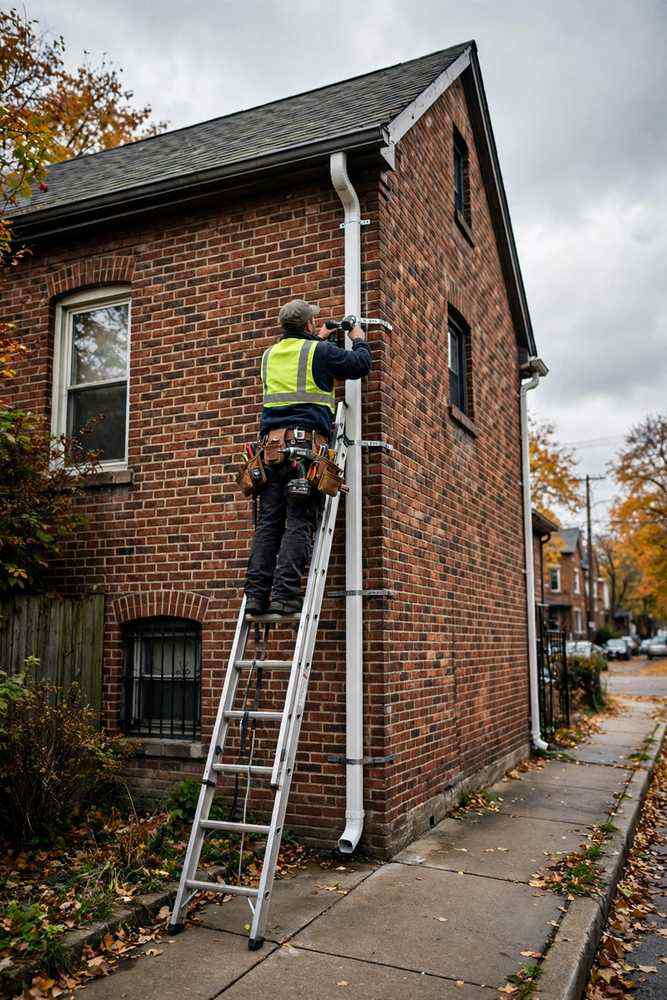
Ladders reach the outlet and the upper leader, and taller rear elevations need the setup planned for their height. Where gutter guards cover the trough, the outlet is reached by lifting the guard section above it.

Typical cases

Typical downspout situations

Downspout elbow pulled away from a brick wall
Downspout Repair

A typical disconnected leader

A typical bungalow where the rear leader has pulled from the wall at the elbow: every rain pours water beside the foundation, and the soil there stays damp between storms. The approach reseats the elbow, replaces the failed brackets with fixings into solid wall, and adds an extension carrying water clear of the building.

The trough above is checked at the same time, since a leader that pulled loose often took the outlet joint with it.

Call (872) 867-8606 →
Water overflowing a gutter where the downspout below is blocked
Downspout Repair

A typical clogged leader

A typical home where the trough overflows at one end during rain but the discharge point stays dry: the choke is partway down the leader, at an elbow packed with debris. The approach works the blockage from the top and the bottom until water runs through cleanly, then checks the outlet and the trough above for the debris that fed it. The clogged downspout guidance describes the signs that point to this cause.

Call (872) 867-8606 →
Shared downspout serving attached greystone rowhouses
Downspout Repair

A typical shared leader on an attached row

A typical attached greystone row where one leader serves more than one roof: a failure on one elevation sends water down the neighboring wall, and the repair has to be read with the whole row in mind. The approach traces the shared path, repairs the failed section, and checks the discharge point for where its water actually goes. Shared leaders are a recurring pattern in North Lawndale, where attached K-Town rows make one owner's leader the neighbor's concern too.

Call (872) 867-8606 →
Problems we solve

Problems downspout work solves

These are the downspout repair problems Chicago homeowners call about most, and how each one is approached.

Ask a pro →
01

Water landing beside the foundation

A leader that discharges at the wall pours roof water onto the soil pressing against the foundation. Extensions and discharge direction move that water clear, and the check at the end of the job covers the landing point, not just the flow. The pooling water explanation covers what to look for.
↗
02

Choked elbows backing up runs

An elbow packed with debris stops the run above it, and the symptom is overflow at the top with silence at the bottom. Clearing the choke point restores the path, and the trough above is checked for the debris that will choke it again. Testing under water confirms the path is open again.

↗
03

Loose leaders pulling from walls

Leaders pull from walls when brackets fail, when fixings lose their hold, or when ice load drags the leader out of line. Resetting brackets into solid wall and replacing deformed sections keeps the leader straight and still through the next winter. Straight, still leaders shed water properly and stay fixed through winter ice load.

↗
04

Undersized leaders on big elevations

A narrow leader below a wide trough or a valley-fed run is a bottleneck that shows in heavy rain. Oversized leaders and added outlets address the cause, and the sizing follows the roof area and the flow arriving at the outlet. Long rear elevations in Austin are a common setting for this mismatch.

↗
Proof you can check

Facts you can check before you call

  • 5.0-star Google rating · 17 Google reviews
  • Business address · 2332 N Laramie Ave, Chicago, IL 60639
  • Business hours · Mon–Sat 6:00 AM–5:00 PM, Sun 6:00 AM–1:00 PM
  • Phone · (872) 867-8606
  • Service area · Chicago, IL
Neighbors recommend us

What Chicago homeowners say

★★★★★
“The team came out in less than 24 hours to give a quote and started the job the same day. Very professional and did a clean job! We will be using them again! Highly recommend for guttter cleaning!”
DD

Dave DavisGoogle review · 2 years ago

★★★★★
“Santiago's gutter cleaning was a first time experience and I was pleased with the price effort and efficiency to make sure my gutters look like brand new and most importantly the professionalism that was presented to us for a first time customer.”
MV

Maria Del Rosario ValenciaGoogle review · 2 years ago · Translated from Spanish by Google

Good questions

Downspout Repair questions Chicago homeowners ask

(872) 867-8606 →

Overflow at the top of the run, spilling over the front edge during rain, and little or no flow at the discharge point. The clogged downspout guidance covers the signs, and the overflowing gutters explanation separates a blockage from an undersized system.

Far enough that roof water does not return to the foundation wall, on ground that carries it away rather than back. The right distance depends on the lot's slope and planting, and it is settled on site, not from a single rule. Extensions are fitted to the lot as it stands.

Rain barrels are available through a Metropolitan Water Reclamation District programme, and a diverter fitting on the downspout is what feeds one. This page covers downspout repair and installation; call (872) 867-8606 during business hours to talk through what fits a particular setup, including whether a diverter suits the leader in question.

No, not on their own. Downspouts manage roof water and surface water, keeping it from adding to the water pressing on the foundation. Basement flooding from sewer surcharge is a different problem, and the July 2023 storm showed its scale. Downspout work is one honest part of the picture, not a cure for sewer backups.

It depends on whether the job is a single elbow, a full leader, an added leader, or extensions and discharge work, and on the height of the elevation. For a quote, call (872) 867-8606 during business hours: Mon–Sat 6:00 AM–5:00 PM, Sun 6:00 AM–1:00 PM. The office is at 2332 N Laramie Ave, Chicago, IL 60639.

Ready when you are

Get downspout repair help in Chicago

Call (872) 867-8606 during business hours — Mon–Sat 6:00 AM–5:00 PM, Sun 6:00 AM–1:00 PM — and tell us what is happening with your gutters.

Call (872) 867-8606 →
Get in touch by phone

Talk to a Chicago gutter crew

Call (872) 867-8606 during business hours. Tell us what is happening with your gutters and we will talk through the next step on the phone.

Call during business hours(872) 867-8606
Office address2332 N Laramie Ave, Chicago, IL 60639
Office hoursMon–Sat 6:00 AM–5:00 PM, Sun 6:00 AM–1:00 PM
↗
Questions?Call now