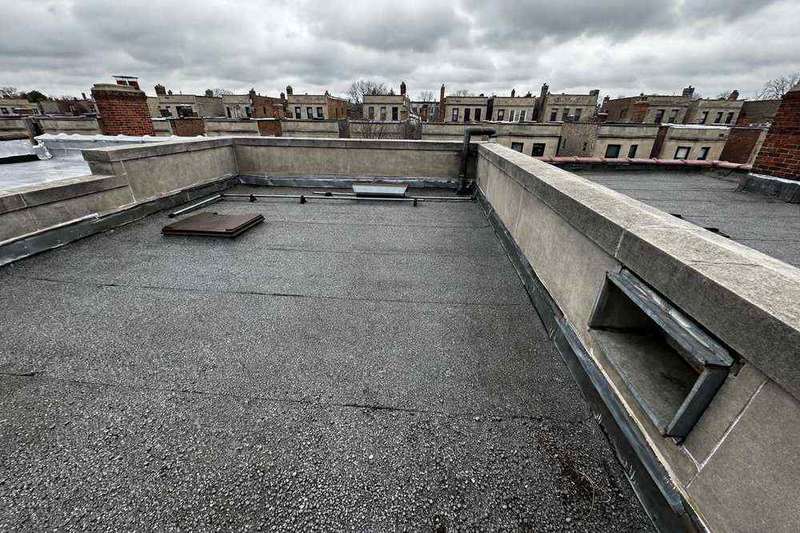
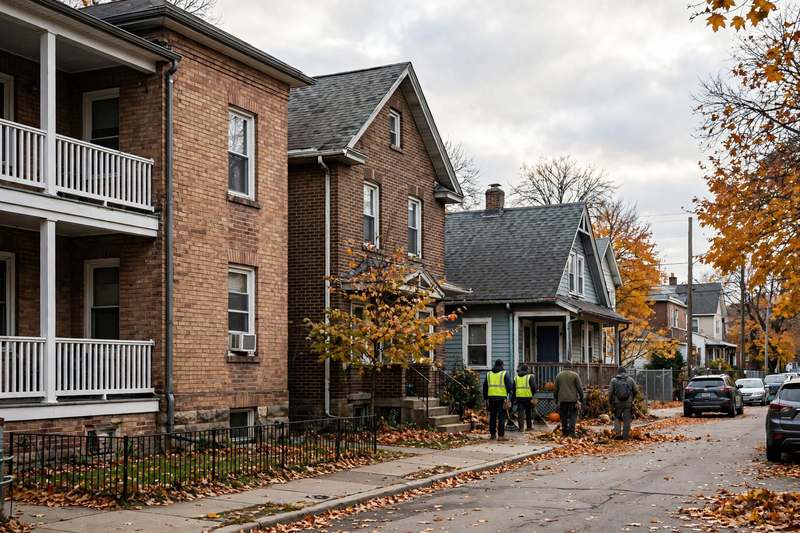
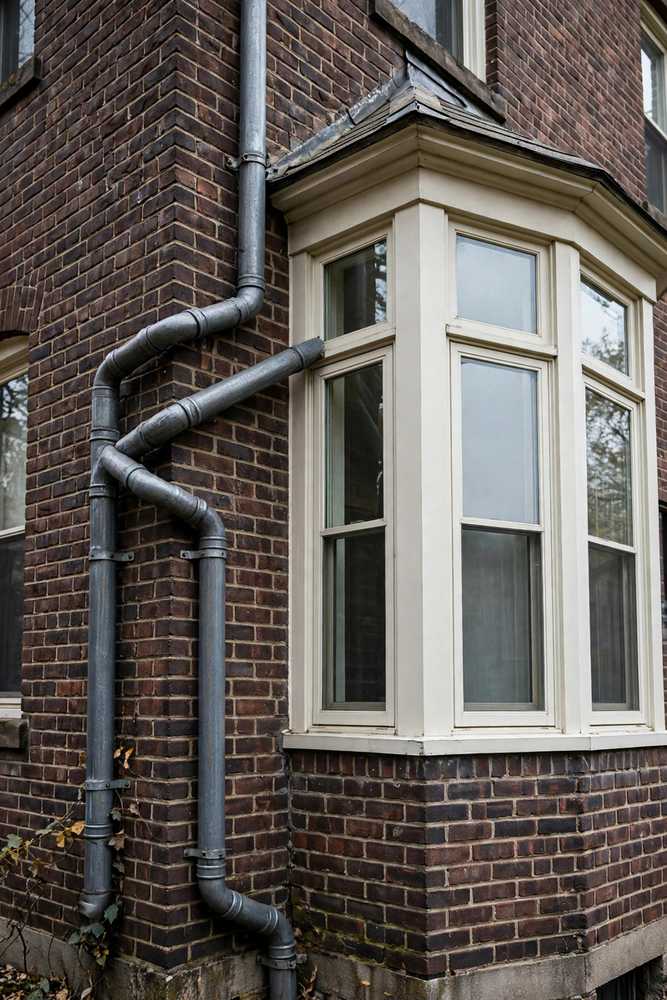
North Lawndale's greystones number roughly 1,700 to 1,714 surveyed buildings, built chiefly between 1890 and 1920, with dense clusters from 1890 to 1915. Two-flats are the most numerous type, alongside three-flats, single-family greystones, one-storey shoebox greystones unique to the area, large brick apartments, and brick two-flats, and more than 93 percent of the stock sits in buildings under five units. Greystones are flat-roofed, with brick walls and a limestone facade, so gutter repair here is flat-roof-first: rear and internal leaders plus parapet scuppers, with visible front gutters the exception rather than the rule.
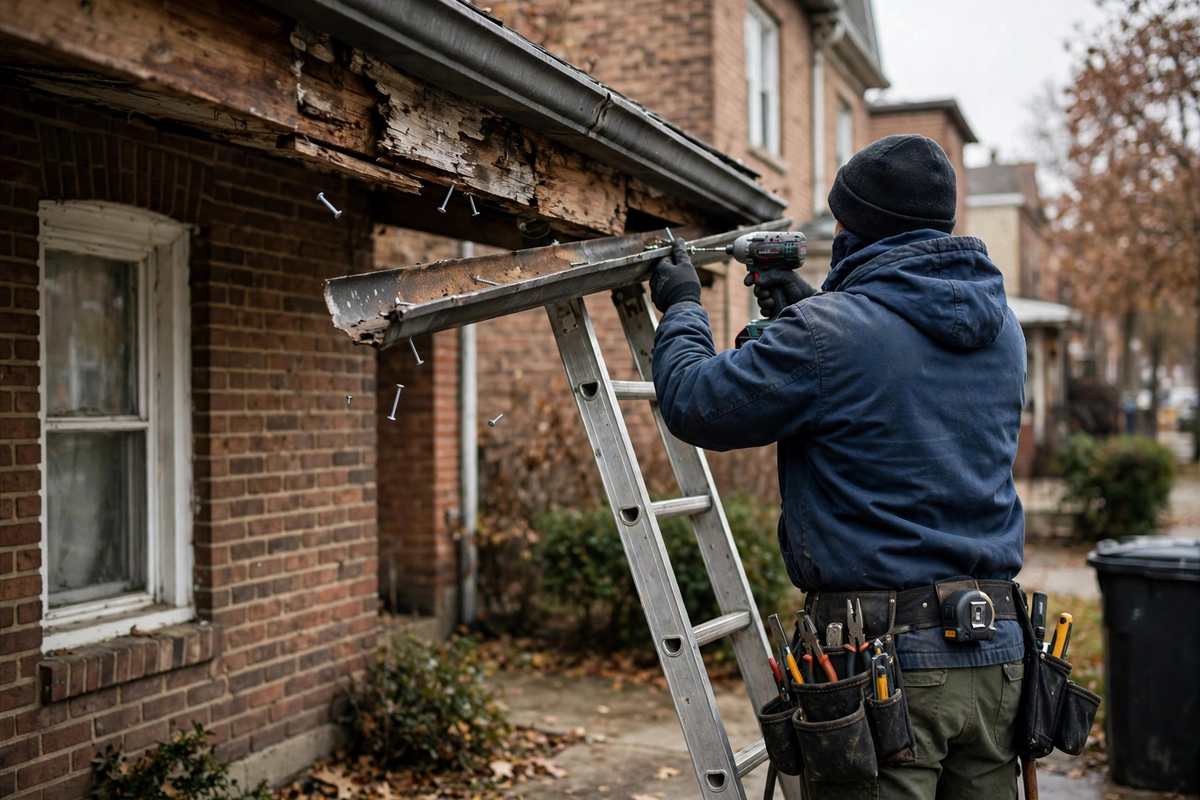
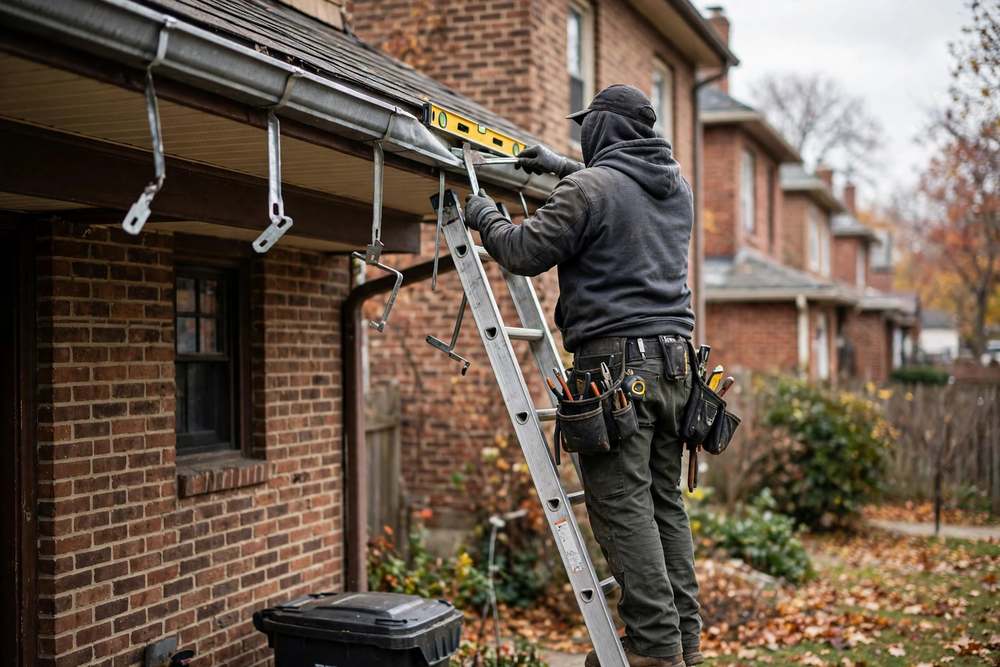
The useful work concentrates where the flat system meets the rest of the house: rear elevations, porches, dormers and additions, and detached garages. Homes of this era typically carry limestone facades and cornices, which makes fascia and cornice condition and masonry downspout anchoring central to any scope, and attached rows often share downspouts, so one owner's failed leader can become the neighbour's masonry problem. Shoebox greystones form a lower, shorter-run variant of the same flat-roof pattern. Fascia repair and downspout repair should be planned together here, since the cornice and the leader meet at the same vulnerable line.
K-Town's greystone ensembles give the area its most attached rows, while Douglas Park and industrial complexes, including the Sears Roebuck complex, frame the edges, and post-1960 population fall left vacant lots whose exposure adds wind and debris. Missing Middle infill two-flats were noted in 2026, though their scale was not quantified. No Chicago Landmark district was verified for North Lawndale, and the Historic Chicago Greystone Initiative is a preservation and restoration programme, not a landmark district or design review, so designation should be verified per address. Gutter cleaning for flat systems should cover scuppers and leaders, not just any visible gutter.
Explore North Lawndale services →