Ice Dam Prevention & Heat Cables in Chicago, IL

Ice dam prevention Chicago IL: heat cables and root-cause advice

Ice dam prevention for Chicago winters: heat cables as one tool among several, with the root causes, insulation, air sealing, and ventilation, discussed honestly.

Ice Dam Prevention & Heat Cables in Chicago, IL
About this service

Heat cables, and the honesty that goes with them

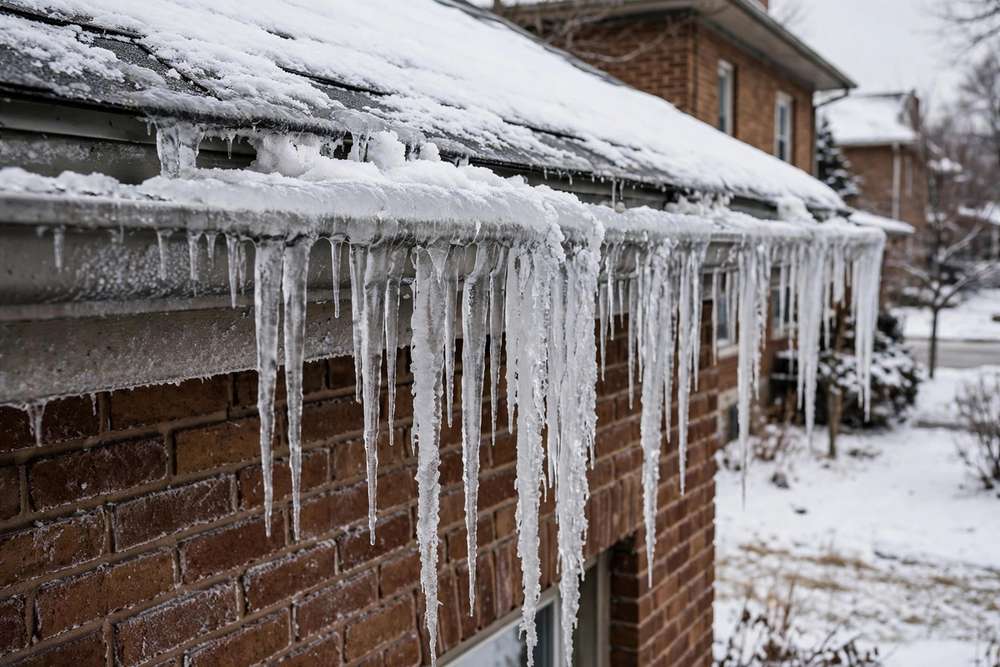
An ice dam forms when snow on a roof melts, runs down to the colder eave, and refreezes into a ridge of ice that traps later meltwater behind it. The trapped water backs up under shingles and finds its way inside, staining ceilings and soaking walls. Chicago winters make the mechanism a normal risk: January temperature normals at O'Hare sit near freezing, with a normal high of 31.6 degrees and a normal low of 18.8 degrees Fahrenheit, so melt-and-refreeze cycling around the freezing point is a routine part of the season. No count of freeze-thaw cycles is claimed here, since no source for one was found.

Heat cables, also called heat tape, are one tool against ice dams: a heated cable run along the eave, in valleys, and through gutters and downspouts, keeping a path open for meltwater to drain. They manage the symptom at the eave. They do not fix the cause, which usually sits in the roof space above: heat escaping through the ceiling melts the snow from below, and the eave, extending past the warm wall, stays cold enough to refreeze it. A page that sells cables without saying that would be selling half a solution.

The root-cause fixes are insulation, air sealing, and ventilation, and they are typically not gutter scope. That boundary is stated plainly here because it is the honest frame: cables keep a drainage path open, while insulation, air sealing, and ventilation reduce the melting that feeds the dam. A home with recurring dams deserves both conversations, and the second one belongs with the trade that does that work. Gutter cleaning before winter is the gutter-side step that matters most, since a trough full of debris holds meltwater and adds ice load. Bungalow blocks in Portage Park, with their low-pitched roofs and dormers, are a common setting for recurring eave ice.

  • ✓ Heat cables along eaves and valleys
  • ✓ Where cables help, and where they do not
  • ✓ Root causes: insulation, air sealing, ventilation
What's included

What ice dam prevention covers

Covered below: Heat cables along eaves and valleys; Where cables help, and where they do not; Root causes: insulation, air sealing, ventilation — and the rest of the checklist.
01
✓

Heat cables along eaves and valleys

Heat cables run in a pattern along the roof edge, through valleys, and along gutters and downspouts, keeping a channel open for meltwater where ice would otherwise dam it. Placement follows the roof: eaves with a history of damming, valleys where meltwater concentrates, and the gutter and leader path that must stay open. The cable is a drainage tool, not a roof heater, sized for the roofline it serves.

02
✓

Where cables help, and where they do not

Cables help most on eaves and valleys with a history of damming, on low-pitched roofs where meltwater moves slowly, and on runs where a frozen gutter blocks drainage. They help least where ceiling heat loss is the cause, where the roof space runs warm all winter, or where dams form high on the roof. Those cases are named during the visit, so the decision weighs the cause.

03
✓

Root causes: insulation, air sealing, ventilation
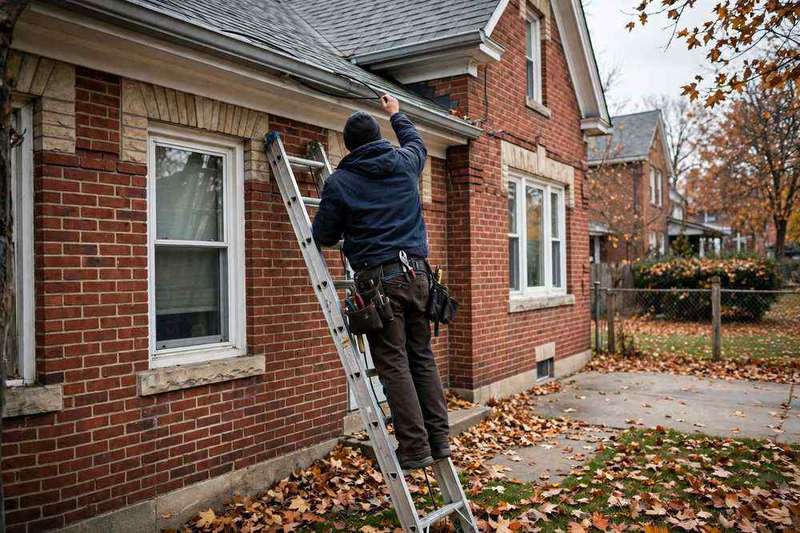
Warm air in the roof space melts snow from below, and meltwater refreezes at the cold eave. Insulation slows heat loss through the ceiling, air sealing closes gaps warm air travels through, and ventilation keeps the roof space near outdoor temperature. Those three are typically not gutter scope, and this page does not claim them. It names them, so a homeowner with recurring dams can talk to the right trade.

04
✓

Ice dam removal methods

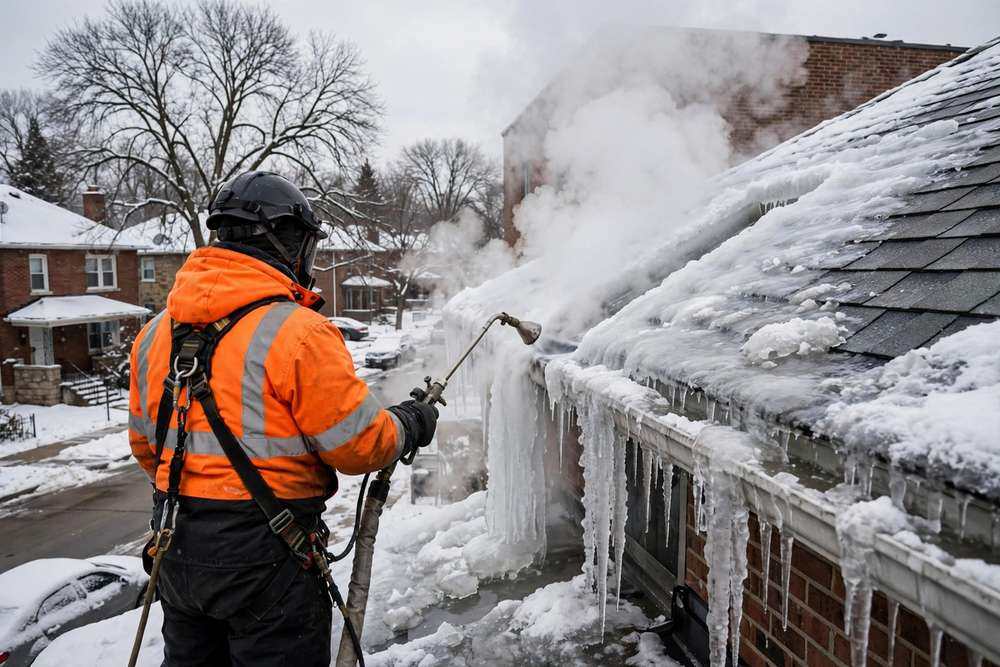
Removal of a dam differs from prevention, and methods used in the trade include steam, which melts ice with low-pressure steam, described here as a method only. This page does not claim steam equipment or steam removal work. Chipping and salt-based approaches carry their own risks to shingles and gutters. The Jefferson Park record shows that heat-cable use exists; removal scope is a question for a call, not an assumption.

05
✓

Winter preparation for gutters

Preparation before winter costs least, matters most: gutters cleared, downspouts tested, joints checked, and the system left open before the first freeze. A trough full of fall debris holds meltwater at the eave and adds ice load to hangers and joints. The winter preparation notes cover the seasonal steps, and gutter repair before winter beats repair after ice damage. Dormered roofs in Dunning show two winter behaviors on one block.

How it works

How ice dam prevention work runs

The job starts with a call to (872) 867-8606 during business hours: Mon–Sat 6:00 AM–5:00 PM, Sun 6:00 AM–1:00 PM. The call covers where dams have formed before, the type of roof, and what the gutters did last winter.

The visit reads the roofline, the eaves, the valleys, and the dormers, and asks where ice has formed and where leaks have shown. The history of the house matters as much as the shape of the roof.

Heat cables are discussed alongside the root causes, with the boundary stated plainly: cables keep a drainage path open, while insulation, air sealing, and ventilation address the melting itself and are typically not gutter scope.

Cables are fitted along the eaves, valleys, and gutter path decided during the visit, and the gutters and downspouts are checked at the same time. Fascia repair is discussed if the boards behind the eave show damage from past ice.

The visit ends with what to watch for through the winter: where ice gathers, where meltwater goes, and when to call. A cable system that is never looked at through the season is only half a system.

Ice Dam Prevention & Heat Cables process in Chicago
STEP 01Call during business hours

The job starts with a call to (872) 867-8606 during business hours: Mon–Sat 6:00 AM–5:00 PM, Sun 6:00 AM–1:00 PM. The call covers where dams have formed before, the type of roof, and what the gutters did last winter.

Tools & methods

Materials and equipment in ice dam prevention

01
✓

Heat cables

Heat cables are the heated element itself, run along eaves, through valleys, and along the gutter and downspout path. Cable length and layout follow the roofline and the history of damming, not a standard pattern applied to every house.

02
✓

Clips and fasteners

Clips and fasteners hold the cable in its pattern along the eave and through the gutter without puncturing shingles or trough. The pattern stays put through wind, snow load, and the expansion and contraction of the season.

03
✓

Controls and sensors

Controls switch the cable on when conditions call for it and off when they do not, so the cable works through the freezing spells rather than running without purpose. How a cable is powered and controlled is discussed during the visit, since setups differ.

04
✓

Gutter and downspout path

The gutter and downspout path is part of the system: a cable that keeps the eave open but leaves a frozen leader below it has only moved the dam downward. Downspout repair is part of the conversation where leaders have frozen before.

05
✓

Ladders and winter access

Ladders and access are planned for the season, with footing and roof conditions read before work starts. Autumn fitting, before sustained cold arrives, is the sensible timing, and winter visits are planned around what the roof and the weather allow.

06
✓

Roofline reading tools

Levels, measures, and a careful eye read the roofline: pitch, valley positions, dormer cheeks, and the eave lengths the cable must cover. The reading decides the layout, and the layout decides whether the cable earns its place. Gutter installation is discussed where the troughs themselves need replacing first.

Typical cases

Typical ice dam situations

Ice dam forming along a low-pitched bungalow eave
Heat Tape Installation for Gutters

A typical bungalow with recurring eave ice

A typical brick bungalow where ice builds along the front eave every winter and meltwater stains the ceiling below: the roof is low-pitched, the eave overhangs past the warm wall, and the trough freezes early. The approach fits heat cable along the eave and through the gutter and leader, clears the system before winter, and names the root-cause conversation about insulation and air sealing.

The cable keeps a path open; the root-cause talk addresses why the path is needed.

Call (872) 867-8606 →
Icicles and ice buildup in a roof valley beside a dormer
Heat Tape Installation for Gutters

A typical dormered roof with valley ice

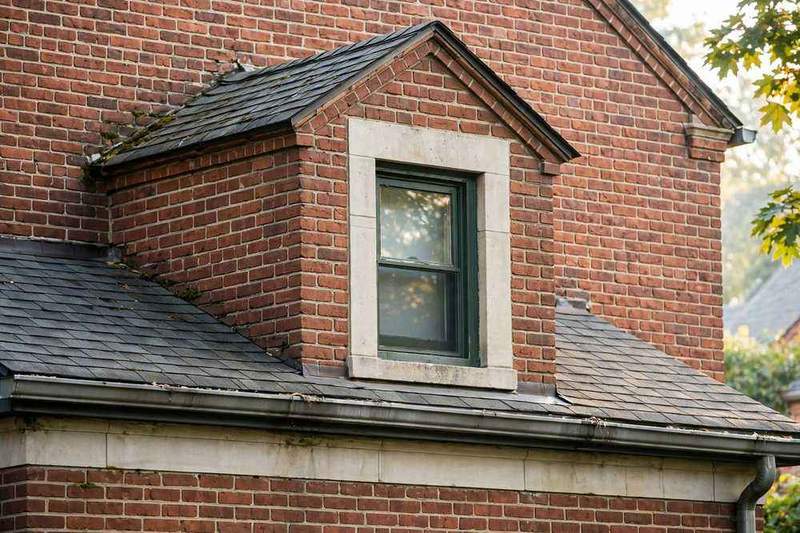
A typical roof with dormers, where valleys concentrate meltwater and ice builds at the valley bottoms and the dormer cheeks: the dams form in the same places each winter, and the leaks show below the valleys. The approach runs cable through the valleys and along the eaves below them, and reads the dormer flashing and gutter junctions as part of the same visit. Finished-attic dormers in South Lawndale add living space under the roof, which changes how heat reaches the roof deck.

Call (872) 867-8606 →
Snow-covered roof with ice forming well above the eave line
Heat Tape Installation for Gutters

A typical home where cables alone are not the answer

A typical home where dams form high on the roof and leaks appear far from the eave: the cause sits in the roof space, with heat escaping through the ceiling and melting snow well above the edge. The approach says so plainly, discusses the root-cause work with the trade that does it, and fits cables only where they still serve a drainage purpose.

Selling cables as the whole answer here would be the wrong job, and the visit is where that call is made.

Call (872) 867-8606 →
Problems we solve

Problems ice dam prevention addresses

These are the ice dam prevention & heat cables problems Chicago homeowners call about most, and how each one is approached.

Ask a pro →
01

Meltwater trapped behind ice

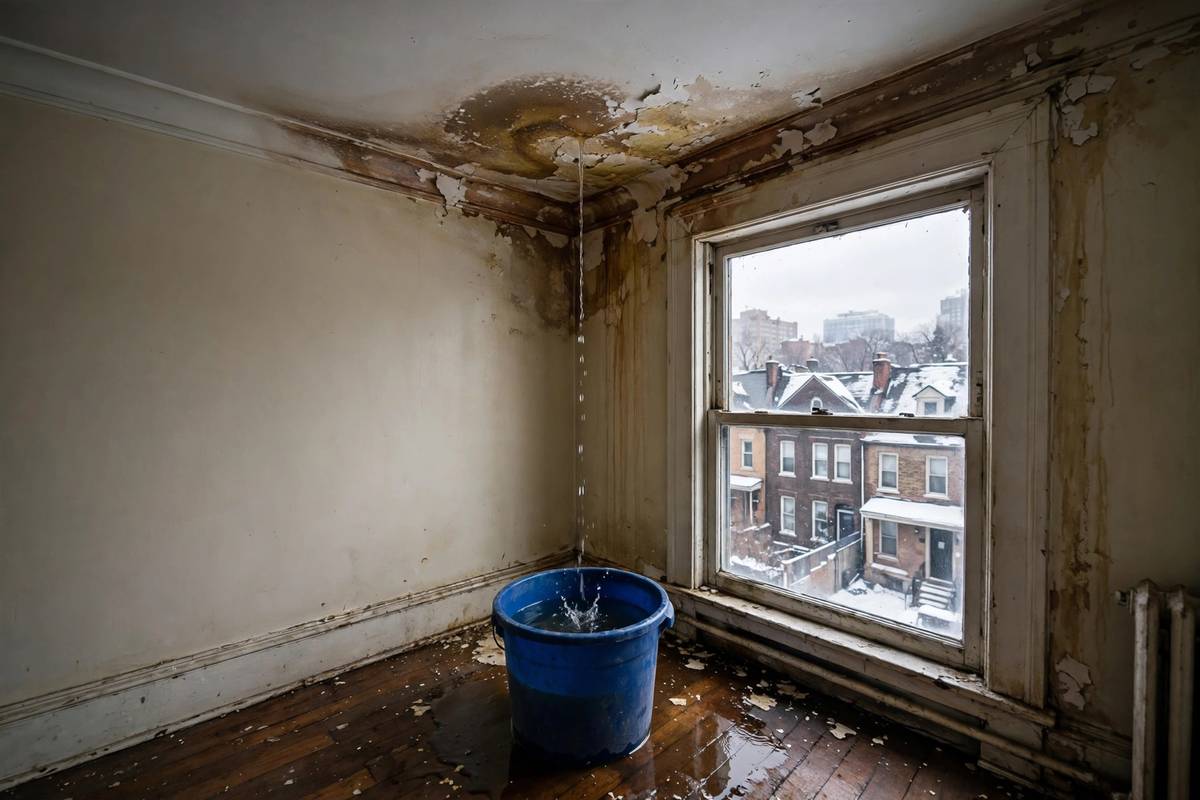
An ice ridge at the eave traps meltwater behind it, and the trapped water backs up under shingles and into the house. Keeping a drainage path open through the eave and the gutter is what cables do, and it is the part of the problem gutter-side work can honestly address.

↗
02

Frozen gutters and leaders

A gutter frozen solid cannot drain, and a frozen leader cannot carry what the gutter sends. Cable runs through the gutter and leader path keep the drainage route open, and the overflowing gutters explanation covers the difference between a frozen system and an undersized one.

↗
03

Debris holding meltwater at the eave

Debris in the trough holds meltwater against the eave and adds ice load to hangers and joints. Clearing before winter is the simplest prevention step there is, and it is part of every ice dam conversation. Dutch Colonial gambrel eaves in Edison Park show how an eave break can hold ice where a straight eave would shed it.

↗
04

Valley and dormer trouble spots

Valleys concentrate meltwater, and dormer cheeks create inside corners where ice builds first. These are the spots where cable layout matters most, and where a generic pattern fitted without reading the roof will miss the places that actually dam. Complex rooflines in Logan Square make the roofline reading essential.

↗
Proof you can check

Facts you can check before you call

  • 5.0-star Google rating · 17 Google reviews
  • Business address · 2332 N Laramie Ave, Chicago, IL 60639
  • Business hours · Mon–Sat 6:00 AM–5:00 PM, Sun 6:00 AM–1:00 PM
  • Phone · (872) 867-8606
  • Service area · Chicago, IL
Neighbors recommend us

What Chicago homeowners say

★★★★★
“Santiago's gutter cleaning was a first time experience and I was pleased with the price effort and efficiency to make sure my gutters look like brand new and most importantly the professionalism that was presented to us for a first time customer.”
MV

Maria Del Rosario ValenciaGoogle review · 2 years ago · Translated from Spanish by Google

★★★★★
“Luis and his associate repaired my gutters quickly and cleaned them a bit for a fair price. I didn't hear any leaking during the last rain and I'm very pleased with the quality of work and efficiency. I would definitely recommend their service and will likely hire them again when time to clean the gutters. Se habla español.”
LS

La Shawn SGoogle review · 2 years ago

Good questions

Ice Dam Prevention & Heat Cables questions Chicago homeowners ask

(872) 867-8606 →

No. Heat cables keep a drainage path open at the eave, in valleys, and through gutters and downspouts. They do not fix the heat loss that melts snow from below, which is addressed by insulation, air sealing, and ventilation, typically not gutter scope. Cables are one tool, and the honest answer names the others.

Autumn, before sustained cold arrives, is the sensible timing, with the gutters cleared and checked as part of the same preparation. The winter preparation notes cover the seasonal steps. Call (872) 867-8606 during business hours to discuss timing for a particular roof.

Steam is one method used in the trade to remove ice dams, melting ice with low-pressure steam, and it is described here as a method only. This page does not claim steam equipment or steam removal work. Removal decisions weigh the leak against the damage removal itself can do, and they are discussed by phone during business hours.

Insulation, air sealing, and ventilation address the cause: heat escaping into the roof space and melting snow from below. They are typically not gutter scope, and this page does not claim them. A home with recurring dams deserves that conversation with the trade that does the work, alongside the gutter-side steps covered here.

It depends on the cable layout, the length of eaves and valleys covered, and the condition of the gutters and leaders the cable runs through. For a quote, call (872) 867-8606 during business hours: Mon–Sat 6:00 AM–5:00 PM, Sun 6:00 AM–1:00 PM. The business is based at 2332 N Laramie Ave, Chicago, IL 60639.

Ready when you are

Get ice dam prevention & heat cables help in Chicago

Call (872) 867-8606 during business hours — Mon–Sat 6:00 AM–5:00 PM, Sun 6:00 AM–1:00 PM — and tell us what is happening with your gutters.

Call (872) 867-8606 →
Get in touch by phone

Talk to a Chicago gutter crew

Call (872) 867-8606 during business hours. Tell us what is happening with your gutters and we will talk through the next step on the phone.

Call during business hours(872) 867-8606
Office address2332 N Laramie Ave, Chicago, IL 60639
Office hoursMon–Sat 6:00 AM–5:00 PM, Sun 6:00 AM–1:00 PM
↗
Questions?Call now