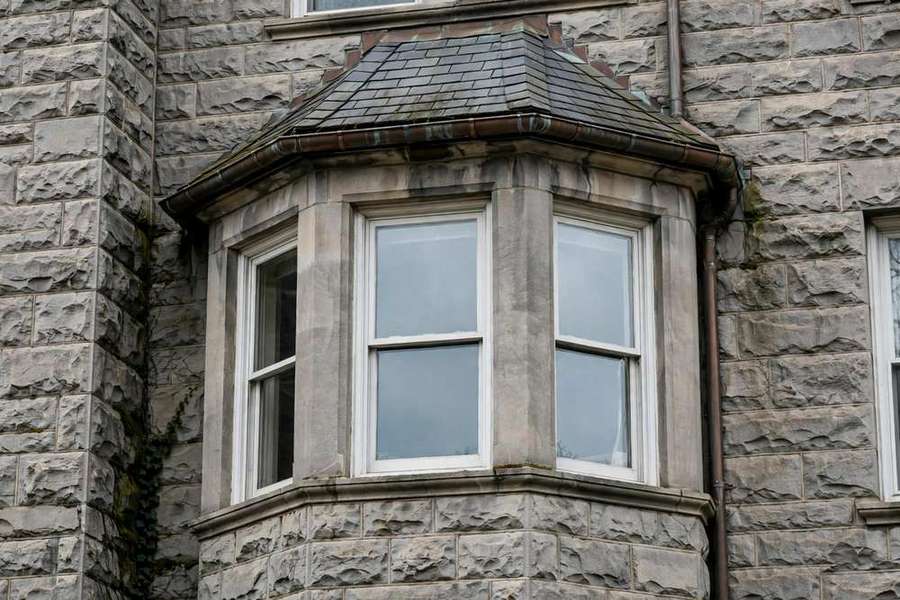
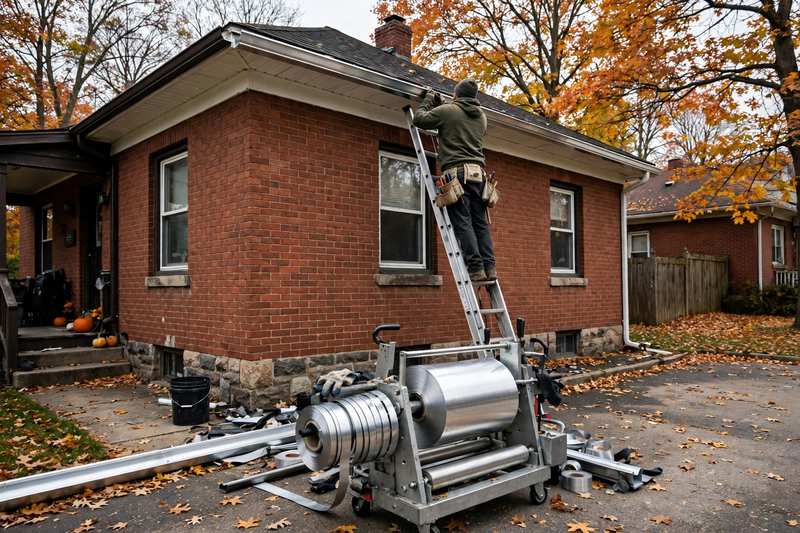
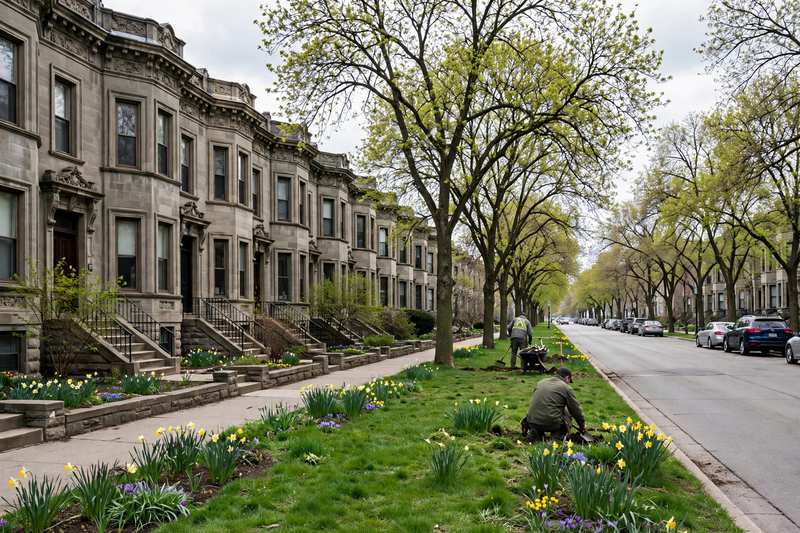
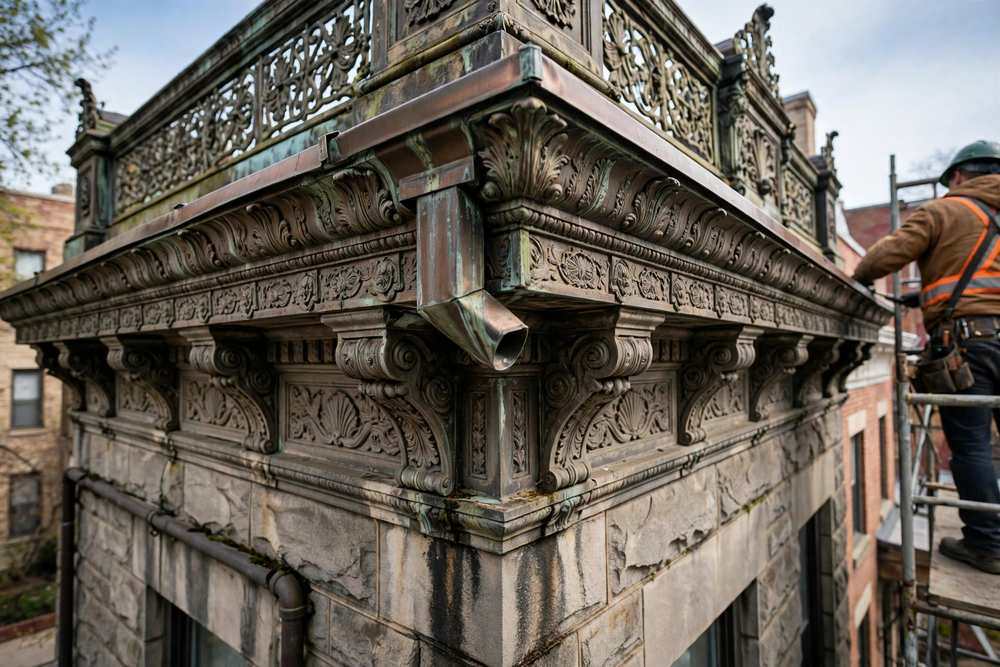
Englewood began as a rail-junction settlement called Junction Grove and was annexed in the late 1800s. Its 63rd and Halsted retail district was the second-largest outside the Loop in the 1930s. The housing is early-1900s brick and stone rowhomes, bungalows and Craftsman houses plus multifamily buildings, with greystone two-flats from 1898 to 1903 in listings, and a median year built of 1914 — the oldest verified median in the southwest research track. Roof forms mix pitched rowhome and bungalow eaves with flat-roofed greystone two-flat drainage through parapets and rear leaders, read building by building. Homes of this era typically show a century of service on fascia and joints. Gutter repair and seamless gutter installation begin with the building's actual form. See also gutter installation in West Englewood.
The Large Lots program was implemented first in Englewood, and the vacant-lot and side-lot pattern changed drainage on assembled lots: a house with a side lot beside it sheds water differently from a house tight against its neighbours. Homes of this era typically need discharge routed for the assembled lot, not the original narrow one. New affordable infill, including Hope Manor, stands beside century-old stock, so new eave lines and old ones share the same blocks. Attributed context — the most vacant lots in the city and a 2008 foreclosure figure described as the highest in the city — is preserved as attributed context only, not as a surveyed fact about any block. Downspout repair and gutter cleaning follow the lot in front of them.
Apartment buildings from the late 1910s to the 1920s along 63rd to 69th Streets east of Halsted are claimed only through a weak source and are flagged here as unverified. No landmark district was verified. The 63rd and Halsted retail corridor is commercial and excluded from this page's residential framing. For the neighbouring areas, see gutter installation in Greater Grand Crossing and gutter installation in New City, or the full Chicago locations list.
Explore Englewood services →