About this service
A guard comparison without a favorite
No unbiased guard comparison exists among Chicago competitors: most comparisons are published by sellers of one type. This page takes the other approach, describing each guard type sold in the Chicago market, what it does well, and where it struggles, so the choice follows the house and its trees rather than a brand. Brand names appear here only as market evidence, describing products sold in the Chicago market by other companies. They are not brands carried by this business, and no brand on this page should be read as an endorsement or a carried line.
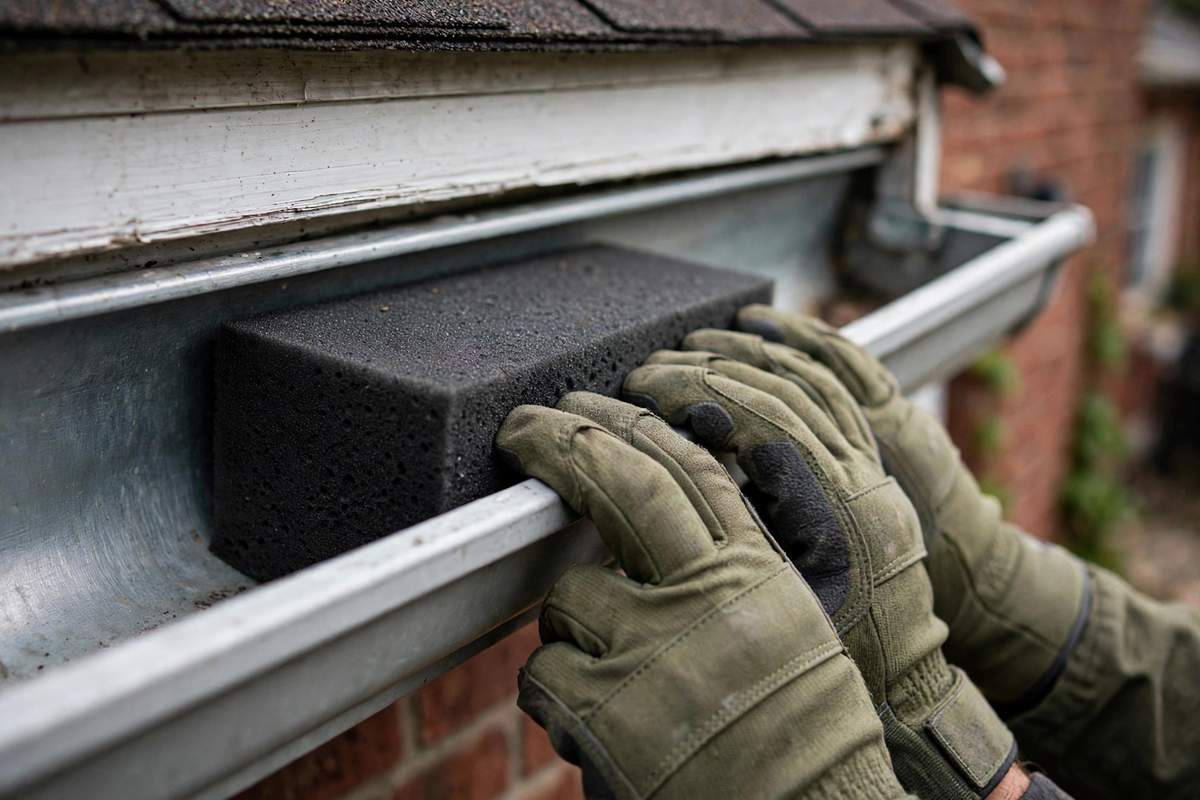
Guards do one job: they keep debris out of the trough while letting water in. How well they do it depends on the size of the debris, the pitch of the roof, and the volume of water arriving at once. Fine mesh stops small debris and can slow heavy flow; open designs pass water freely and let small debris through; inserts sit inside the trough and trade capacity for simplicity. Chicago's canopy, 17.2 percent cover in a 2010 Forest Service study, means most homes have real debris pressure, but the right answer still varies house by house. Heavily wooded blocks in Forest Glen and Edison Park face a different debris load from open blocks, and guard choice should reflect that.
Guards reduce cleaning, they do not end it. Fine debris, seeds, and grit still reach the trough, outlets and downspouts still need checking, and a guard can hide a developing blockage if the trough is never looked at. Guards are understood as part of a maintenance rhythm that includes gutter cleaning, not as a replacement for it. Where the existing gutters are failing, gutter installation comes before guard work, since a guard fitted to a sagging run protects a system that is already losing its pitch.
- ✓ Micro-mesh guards
- ✓ Reverse-curve and surface-tension guards
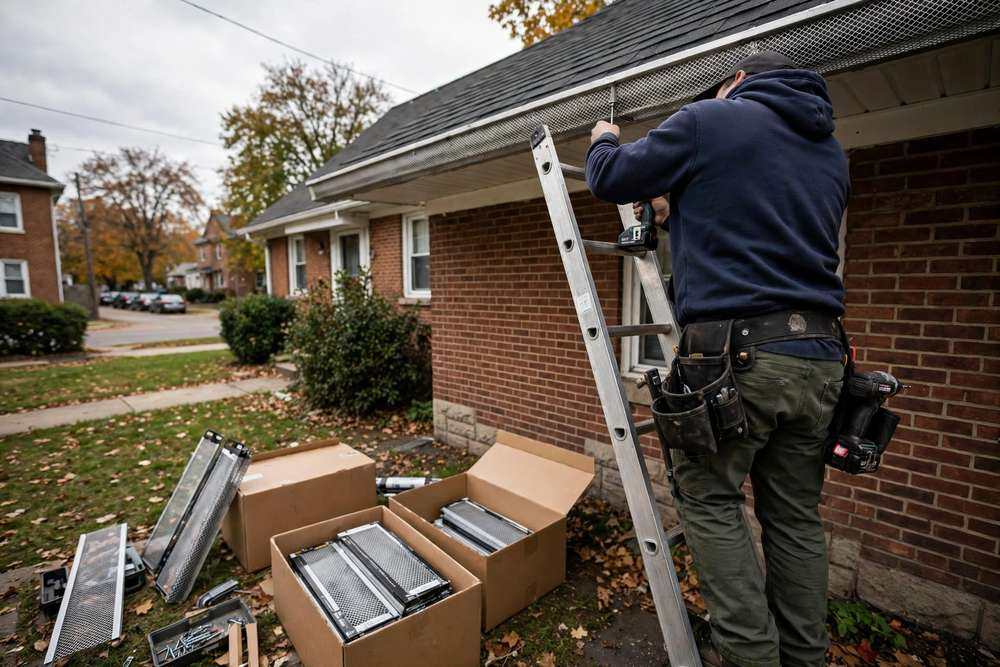
- ✓ Screen and mesh guards