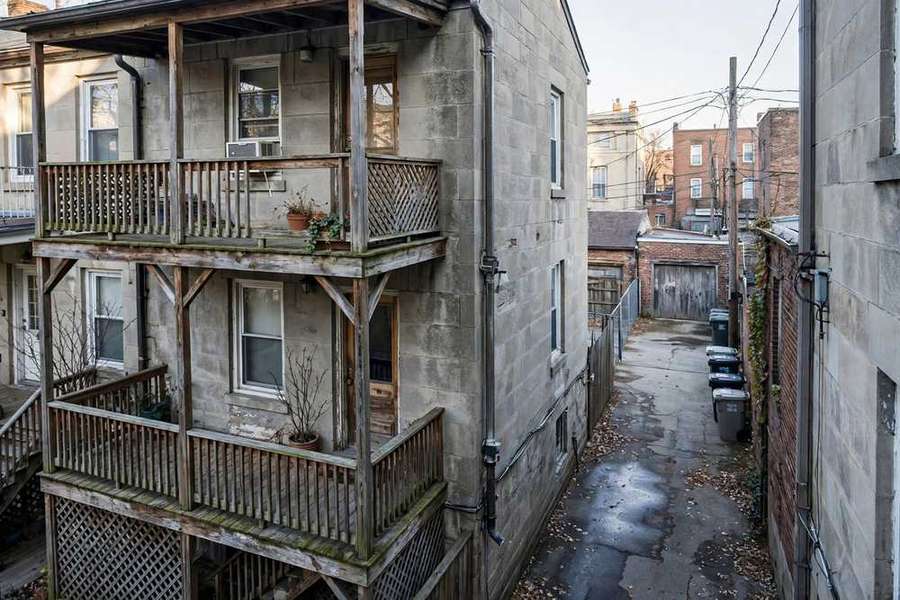
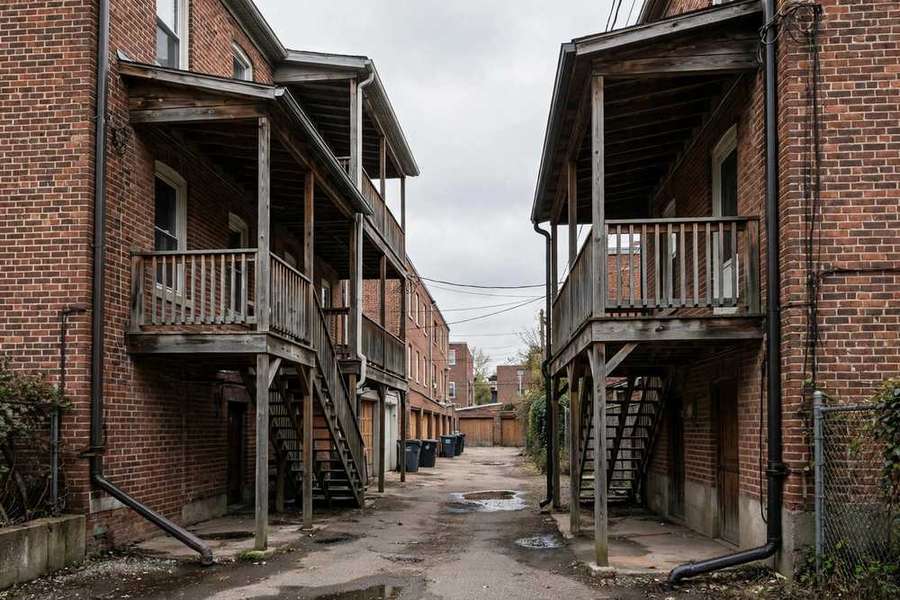
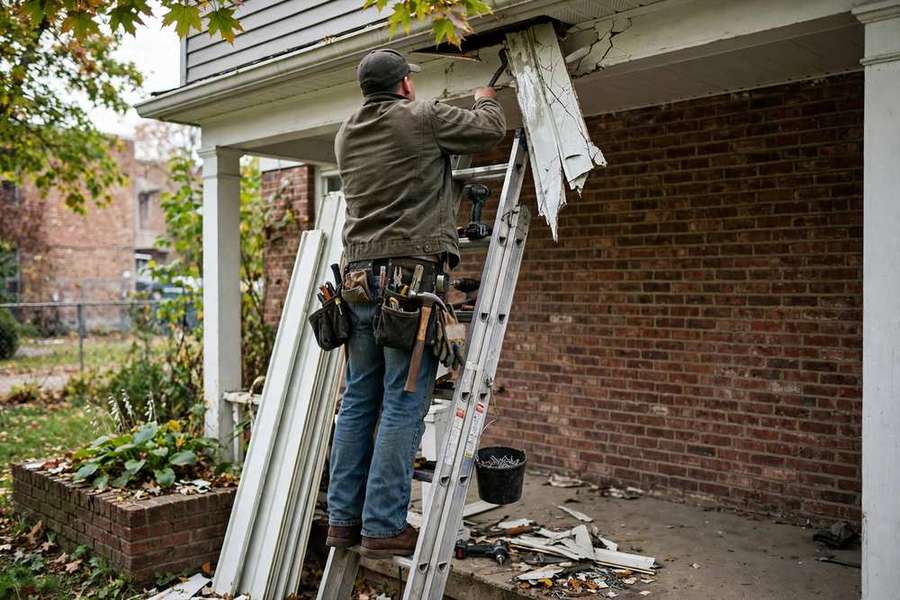
Framing A, inside the historic district: the historic Pullman rowhouses inside the landmark and National Park Service district, from 103rd to 115th Streets and Cottage Grove to Ellis Avenue, are preservation-sensitive, and this framing must never be merged with the wider area. Pullman was the first comprehensively planned industrial community in the United States, built from 1880 to 1884 by George Pullman, with architect Solon Spencer Beman and landscape architect Nathan Barrett, holding 1,300 housing units in Beman's count, or about 900 original rowhouses plus public buildings protected by 1972. Red-brick Queen Anne rowhouses with Romanesque details, indoor plumbing, gas, and sewers, range from tenement blockhouses housing 12 to 48 families to detached executive homes, with uniform cornice lines, front stoops, and tree-lined streets. Attached rowhouses share cornice and parapet lines, so individual work affects row continuity, and box and built-in troughs plus half-round profiles are plausible for 1880s Queen Anne rows but were not surveyed. No generic replacement language is used for this framing: uniform cornice lines make fascia and cornice work inseparable from gutter work, and review must be verified per address before any scope claim. Fascia repair inside the district is cornice work first.
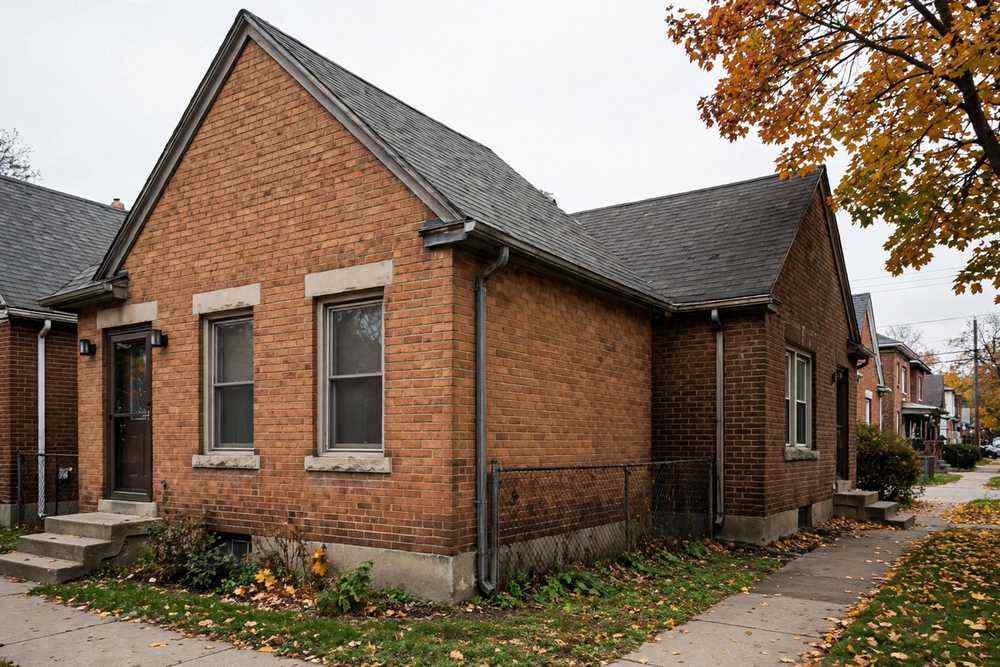
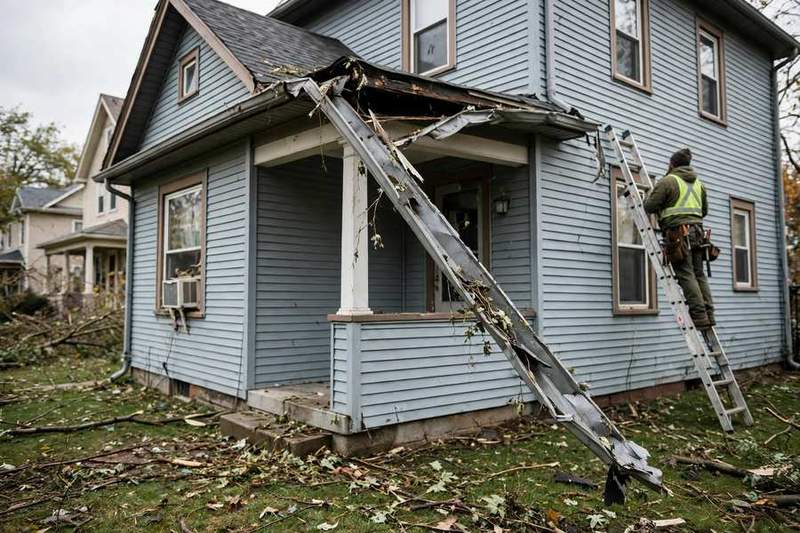
Framing B, outside the district: the wider community area outside the district, including the North Pullman annex and the blocks west of Cottage Grove, is described in ordinary framing where verified, and this framing must never be merged with the district framing above. The wider area holds single-family houses, bungalows, and two-flats in ordinary patterns, with about 44 percent rowhouses and attached houses and about 60 percent of stock built in or before 1939. Roof forms were not verified for rowhouse subtypes anywhere in the area, so no uniform pitch or flat pattern is assumed, and varied pitched, flat, and mansard elements by row must be field-verified. Gutter repair and seamless gutter installation outside the district follow the ordinary patterns of the individual house, with the row-continuity concerns of the district framing left behind at the district boundary.
Designations, applying to framing A: Pullman was listed on the National Register on 8 October 1969, designated a National Historic Landmark District on 30 December 1970, designated a Chicago Landmark district on 16 October 1972, designated a National Monument on 19 February 2015, and became a National Historical Park in December 2022, the strongest controls in the research. Facade protection is sourced: protection of the facades went into effect after the 1970s designations, homes are privately owned today, and the National Park Service states that it is the city Pullman district that provides legal protection for the privately owned buildings within it, with no evidence that the Park Service reviews private gutter work. The eastern boundary wording differs between sources, Ellis Avenue versus the railroad tracks, and that discrepancy is preserved: verify per address. Gutter cleaning inside the district should be planned with the same per-address verification.
Explore Pullman services →
Two framings, never merged. Framing A covers the historic-district rowhouses inside the landmark and National Park Service district, 103rd to 115th Streets and Cottage Grove to Ellis Avenue: preservation-sensitive, facade protection since the 1970s, verify review per address, no generic replacement language. Framing B covers the wider community area outside the district, including the North Pullman annex and blocks west of Cottage Grove, in ordinary framing where verified.
Gutter Lake City - Gutters Installation & Repair